
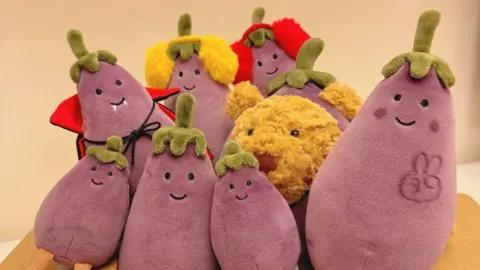
Stella Huang bought her first Jellycat plush toy in the midst of a period of unemployment during the global health crisis. Inspired by a friend's enthusiasm for the British-designed toys, her curiosity was truly ignited when she saw a unique gingerbread house design featured on a major Chinese social media platform.
While The Christmas holiday isn't traditionally observed across China, being more of a commercial event rather than a religious festival, the imagery of gingerbread houses resonated with her. "The festival doesn't hold much to me... However, I have always loved the appearance of gingerbread houses," she explains. This prompted her to ask a friend in Guangzhou to purchase it for her.
That purchase occurred in 2021, right as the brand was about to achieve enormous success in China and beyond. "People were uneasy, and nobody knew what would happen," says Stella, who picked up a habit of petting and squeezing her soft toys for comfort throughout a difficult period. Residing in Beijing, which experienced some of the most stringent restrictions in the world, she passed extended periods at home.
Now aged 32 and working in tourism sector professional, Stella continues to grow her collection. It has swelled to around 120 toys, representing an investment of about 36,000 yuan. "As an adult, you have numerous matters you can't share with other people... and the troubles we encounter are far more complicated than in the past," she says reflectively. "These soft toys assist me in managing my feelings."
Initially created with kids in mind, these squishy creatures have evolved into an international phenomenon, especially in China where an increasingly disenchanted younger generation is turning to them for emotional support.
The Rise of Kidults
Her Gingerbread house toy is part of their "Amuseable" collection, a set of characters with tiny expressions inspired by everyday items, ranging from toilet rolls and boiled eggs. These items have become a key "breakout success" which "appeal to a wide Gen-Z and millennial audience" around the world, as noted by market observers.
Their growing appeal "may have something to do with a desire to feel companiable," propose experts. It is hard to ascertain if the introduction of the now-iconic series back in 2018 was a deliberate strategy to engage the adult market, companies in the sector are under pressure to need to cultivate alternative audiences due to falling fertility rates across numerous countries.
Jellycat made its foray into the Chinese market as early as 2015. By laying significant "groundwork", the toy maker was able to capture "the mood of the pandemic"—when people sought comfort during widespread anxiety—capitalizing on its early success there, as explained by business consultants.
Jellycat's popularity was also boosted by creative pop-up experiences. These in-store events sometimes offered a selection of exclusive "culinary" products. Many fans record their experience interacting and post the videos on social platforms.
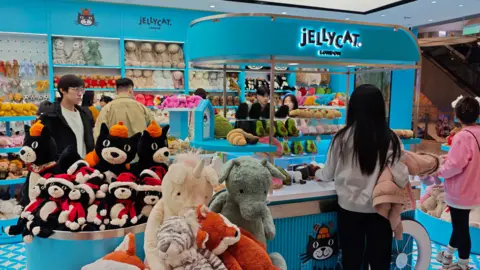
Localisation has also been a core approach. For instance, customers could purchase plush interpretations of traditional British fare such as fish and chips at a pop-up in London. Conversely, products including teacup and teapot plushies were sold at special stores in Chinese metropolises the previous year.
In 2024, the UK-based company's sales is said to have rose by two-thirds to reach a substantial sum. In the same period, it sold roughly $117 million in value of toys in China via leading online marketplaces, according to research estimates.
This expansion reflects a wider surge in China's collectable-toy market among adult consumers seeking emotional comfort and connection. Overall sales of collectable items in China are projected to exceed 110 billion yuan this year, according to a 2024 industry report.
The runaway popularity of other toys such as Labubu, elf-like figures by Chinese toy maker Pop Mart, highlights the country's growing appetite towards collectable toys. The so-called "kidult" trend isn't exclusive to China; adults worldwide are increasingly question "outdated understandings of adulthood," note cultural experts.
Particularly, especially the eggplant plushie—affectionately dubbed "the boss" by Chinese fans—have also spawned numerous online jokes, where users expressing frustrations about the pressures of adulthood. On social media, the "eggplant boss" tag is a space where people sketch various emotive faces on their toy, showing it in different states from drinking to fake-smiling.
As an illustration, a marketing professional from Hong Kong, Wendy Hui, modified her aubergine Amuseable by drawing bags around its eyes and placing a pair of glasses on it. She shared a picture online captioning it: "The mood of employees at the start of the week." "I kept working at home even on time off," the 30-something says. "I just wanted to convey how exhausted I felt."
In this way, Jellycat has become an unexpected, light-hearted outlet for young Chinese to voice their grievances about a slowing economy, in which hard work no longer ensure commensurate returns. Despite heavy online censorship, the internet remains an important, if not the only, arena for these types of conversations.
The brand's frequent launches of exclusive products and the retirement of certain lines—a strategy often called "scarcity marketing" in China—has also fueled {
